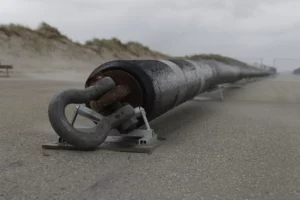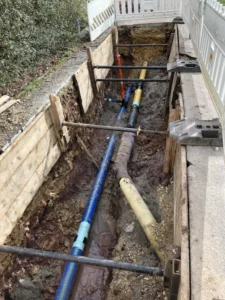
Stadtwerke Esslingen renovated an old cast iron pipeline using trenchless pipe bursting. They were able to significantly reduce effort and costs compared to traditional renovation methods. Due to the high requirements, they used the egeplast SLM® DCT pipe system with integrated quality inspection.
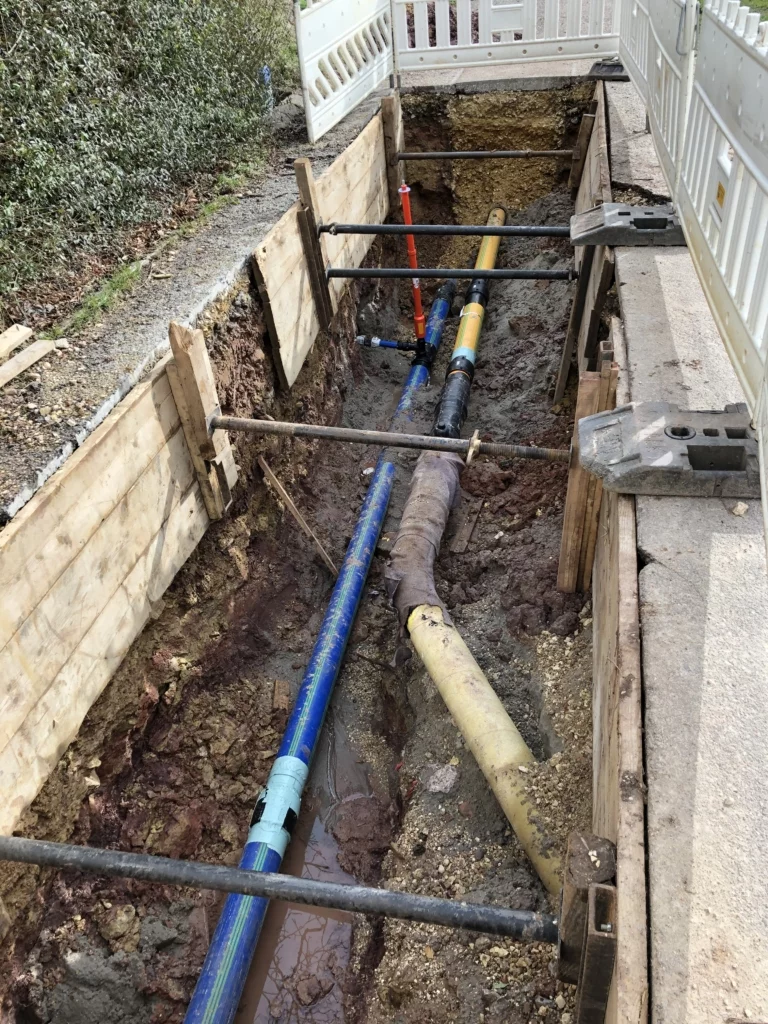
Trenchless renovation using the pipe bursting method
For the renovation of the parallel gas and drinking water pipelines made of cast iron with an outer diameter of 160 millimeters each, Stadtwerke Esslingen opted for trenchless renovation using the pipe bursting method. The renovation of aging cast iron pipelines often involves considerable effort and high costs. To keep both as low as possible, installing the new pipelines using the pipe bursting method is recommended.
In trenchless pipe renovation using the pipe bursting method, a plastic pipe is pulled into the existing pipeline. The old pipe is burst and the fragments are displaced into the surrounding soil. The end result is a renovated plastic pipeline with the same or larger diameter than the previous old pipe. Since this special installation technique places particularly high demands on the pipe material due to the forces involved and the sometimes sharp-edged fragments of the burst material, egeplast expressly recommends the use of protective jacket pipes for this purpose. Stadtwerke Esslingen went one step further and opted for the egeplast SLM® DCT, a pipe system with integrated quality inspection for closed construction methods. Integrated tracer wires enable inspection of the pipe system for integrity directly after installation. This means that supply security can not only be restored relatively easily, but can also be documented beyond doubt at the same time. Stadtwerke Esslingen are very satisfied with the product.

egeplast
SLM® DCT
Verification of the pipe system’s integrity for construction performance acceptance
Increased operational safety
permanent Localization Capability
Trenchless installation techniques are possible without life-shortening damage or reduction of the safety factor.
 Learn more