Plastic pipes for oil and gas production:
reliable, efficient and safe in application

Advantages of PE pipes for your oil and gas production project
Corrosion-resistant plastic pipe systems are an excellent option for transporting aqueous solutions originating from industrial separation processes or separation processes in oil or natural gas production. These solutions are potentially harmful to the environment as they are contaminated with volatile organic hydrocarbons and frequently with salts.
The enormous flexibility of PE pipes allows them to be delivered to the construction site as coiled bundles or on drums and integrated into pipe networks with only a few connection points. However, pipe systems consisting exclusively of PE have their limits in some applications, e.g. at operating temperatures above 60 °C or when transporting volatile hydrocarbons. In the context of hydrocarbon transport, the high solubility of hydrocarbons in the PE matrix of the pipe wall leads to high permeation rates. The safe transport of these environmentally relevant components in the pipe systems over many years of operation is the concern of every responsible operator.

Industrial pipes that set standards

Flexibility
The high flexibility of polyethylene allows for the handling and transport of long coiled lengths in bundles or on drums, integrating them into pipe networks with very few connection points. As a result, PE pipes can be installed very quickly at a speed of over 1 km/day. Furthermore, this high flexibility also enables the use of modern trenchless installation techniques such as the HDD process or pipe rehabilitation using relining. A special option for renewal is the use of pre-formed pipes, which can be inserted trenchlessly in large lengths in dimensions up to 500 mm and fit tightly against the old pipe during subsequent operation.
Permanently tight welded connections
Polyethylene can be welded easily and safely. The specifications are well-established and described in the DVS regulations. The resulting connections are tension-resistant and permanently leak-tight. They thus enable the safe operation of pressure lines even for sensitive or hazardous media.
Permeation-resistant
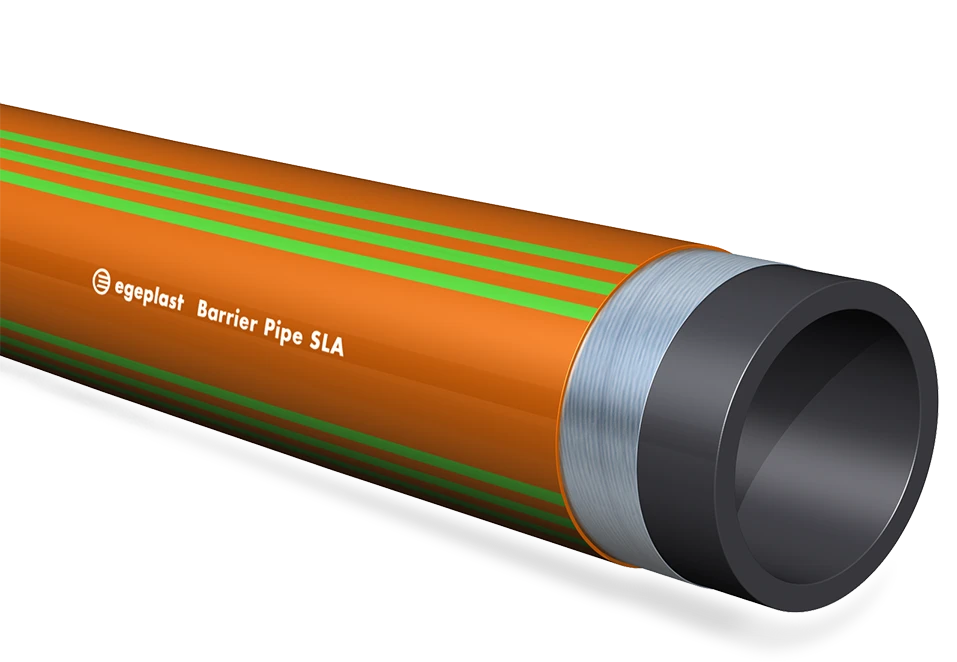
Plastic pipes are resistant to most chemicals and also hydrocarbons. However, permeation can occur, particularly with hydrocarbons. Plastic pipes with barrier layers are therefore ideal for applications requiring a permeation-resistant pipe system. A permeation barrier layer reliably prevents the permeation of pollutants through the pipe wall in both directions.
100% safety through leak monitoring
Some industrial applications require permanent monitoring for potential leaks to protect the environment and possibly comply with legal requirements. The escape of chemical media into the environment, potential consequential damage to humans and nature, and the resulting liability risks can thus be reliably excluded. An electrically conductive aluminum layer integrated into the plastic pipe enables 100% leak monitoring for soil and water protection.
Temperature-resistant pipe systems
Standard PE pipes reach their limits under operating conditions involving higher temperatures or when transporting hot process water. In these cases, pipe systems made of temperature-resistant PE materials are required, which allow for a longer service life. The egeTherm® High-T pipe system can safely transport media up to a continuous temperature of +70 °C with an operating life of 50 years.
Pressure-resistant pipe systems
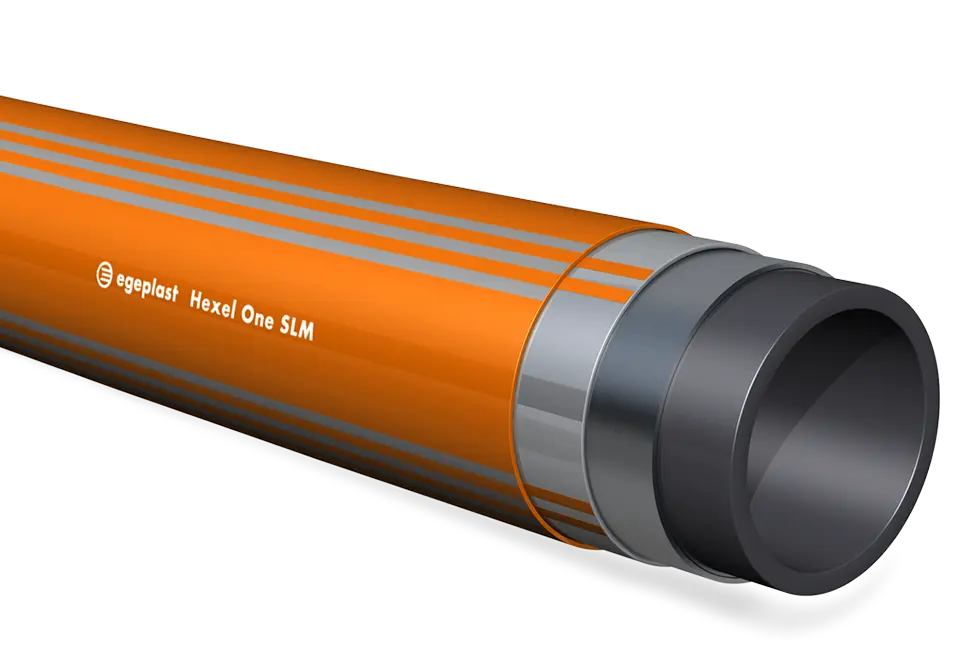
Various applications require pressure ratings above those of standard PE pipe applications. PE pipes offer many advantages such as high flexibility, resistance to corrosion and incrustation, making them an economical solution. With reinforcement layers, PE pipes are also suitable for higher operating pressures. For high pressures, egeplast offers self-reinforced high-pressure pipes (HexelOne® SLM), which are monocomposites made solely of polyethylene. This reinforcement enables new areas of application in the high-pressure range, i.e., operating pressures above the applications previously covered by PE pipes.
Source: Sustainability