New product egeLiner® Kanal
The egeLiner® Kanal offers a sustainable and economical solution for the rehabilitation of old sewer pipes. The egeLiner® Kanal is installed trenchless using close-fit lining and ensures future-proofed rehabilitation thanks to its permanently leak-proof, welded joints and long service life. The rehabilitation specialists at Max Bögl have completed an initial reference project.
Pre-deformed polyethylene (PE) pipes represent an established method for close-fit rehabilitation. With the egeLiner® Kanal, egeplast has now expanded its portfolio to include sewer pipes. As in the pressure pipe sector, the process is based on the new PE pipe being pulled into the sewer to be rehabilitated in a pre-deformed state and then being pressed against the inner wall of the old pipe through heating and mechanical reversion. This creates a virtually gap-free bond (“close fit”) between the old and new pipe. Cross-sectional losses remain low, so that the hydraulic performance of the sewer is largely maintained.
The following key advantages result from the rehabilitation of sewers:
- Ensuring leak-tightness against groundwater infiltration and sewage exfiltration
- No root penetration
- Creation of a jointless, structurally self-supporting pipe with the quality of a new installation
- Maintenance of hydraulic capacity
- Trenchless construction with correspondingly low surface disruption
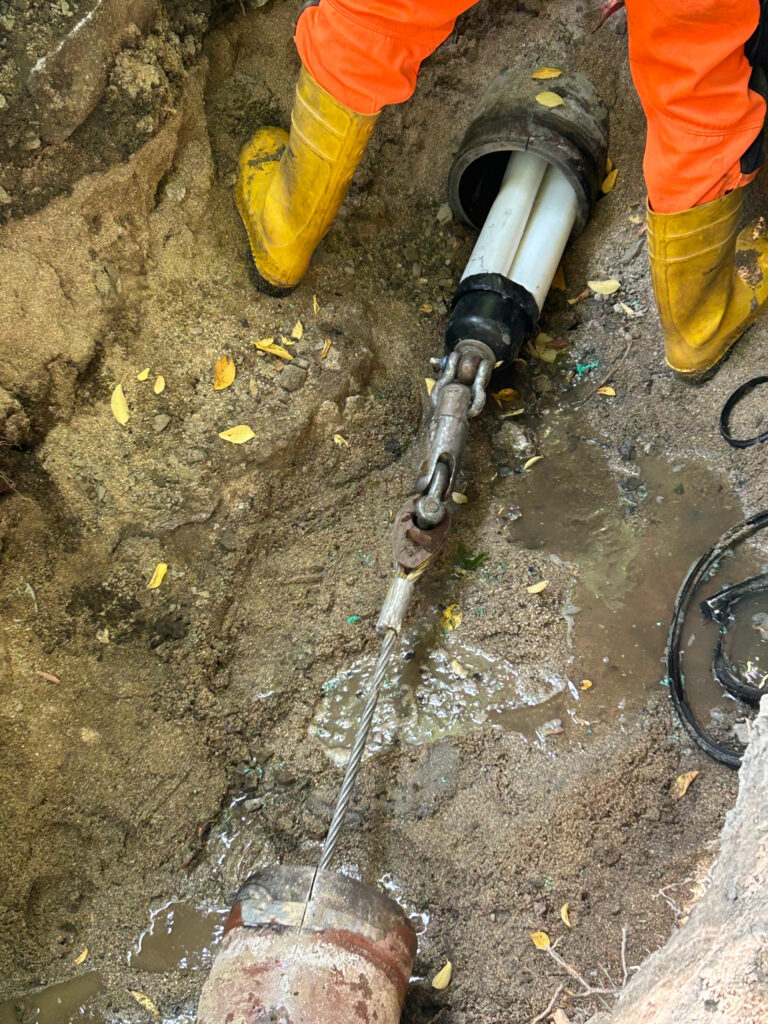
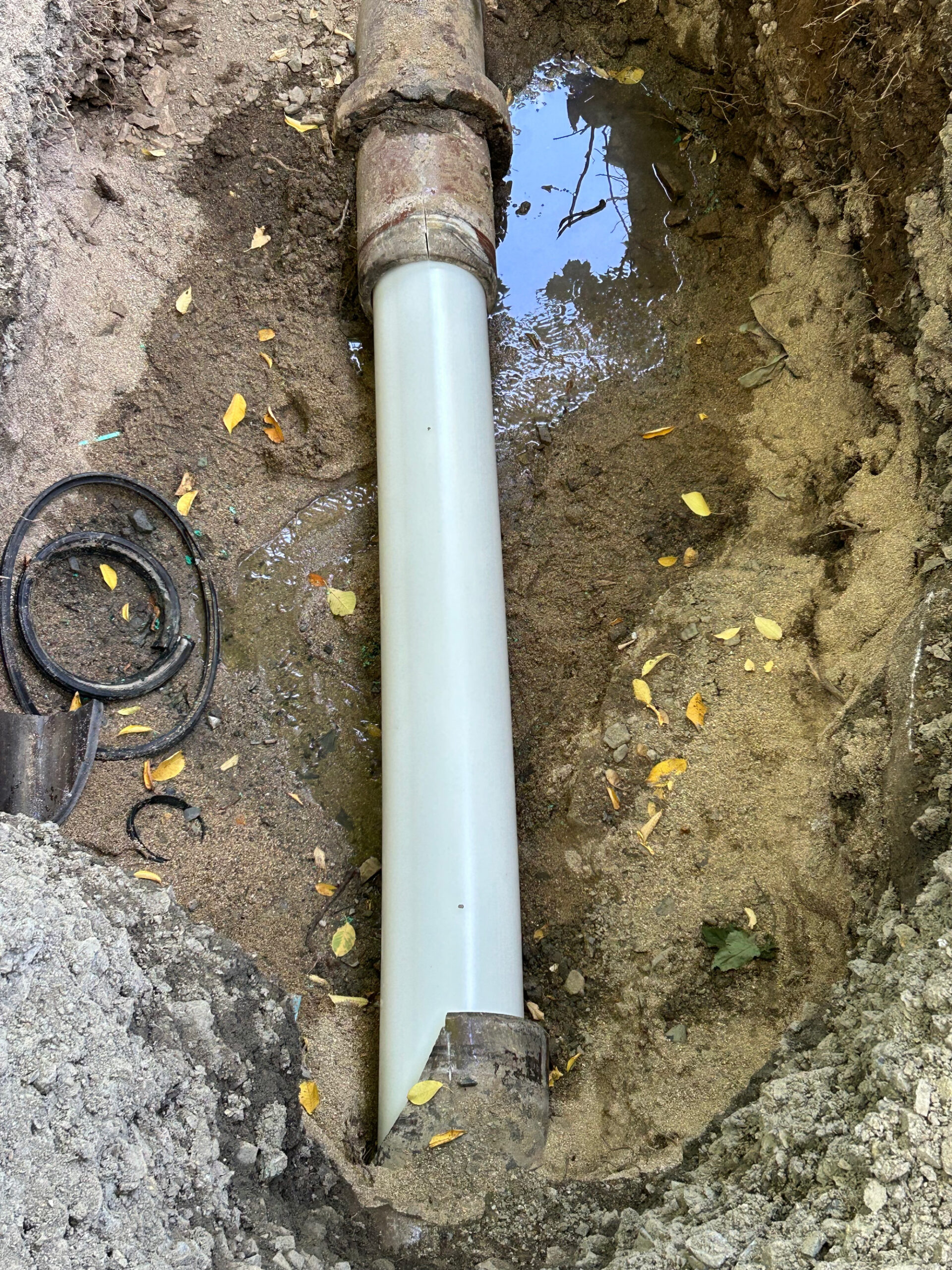
Pre-deformed polyethylene pipes thus offer a technically reliable and durable solution for the rehabilitation of sewers using the close-fit method. For optimum ease of inspection, the new egeLiner® Kanal pipes are produced in a light color. This facilitates CCTV inspection as well as quality assurance during and after rehabilitation. An initial reference project was completed together with our partner Max Bögl: in Clausthal-Zellerfeld, a DN 200 sewer line with a length of 215 m was successfully rehabilitated. Despite difficult conditions with tight spaces as well as several bends and manholes, the pull-in process went smoothly. After the final inspection, the sewer was put back into operation and the inlets, which had been measured beforehand using robotic technology, were reopened.
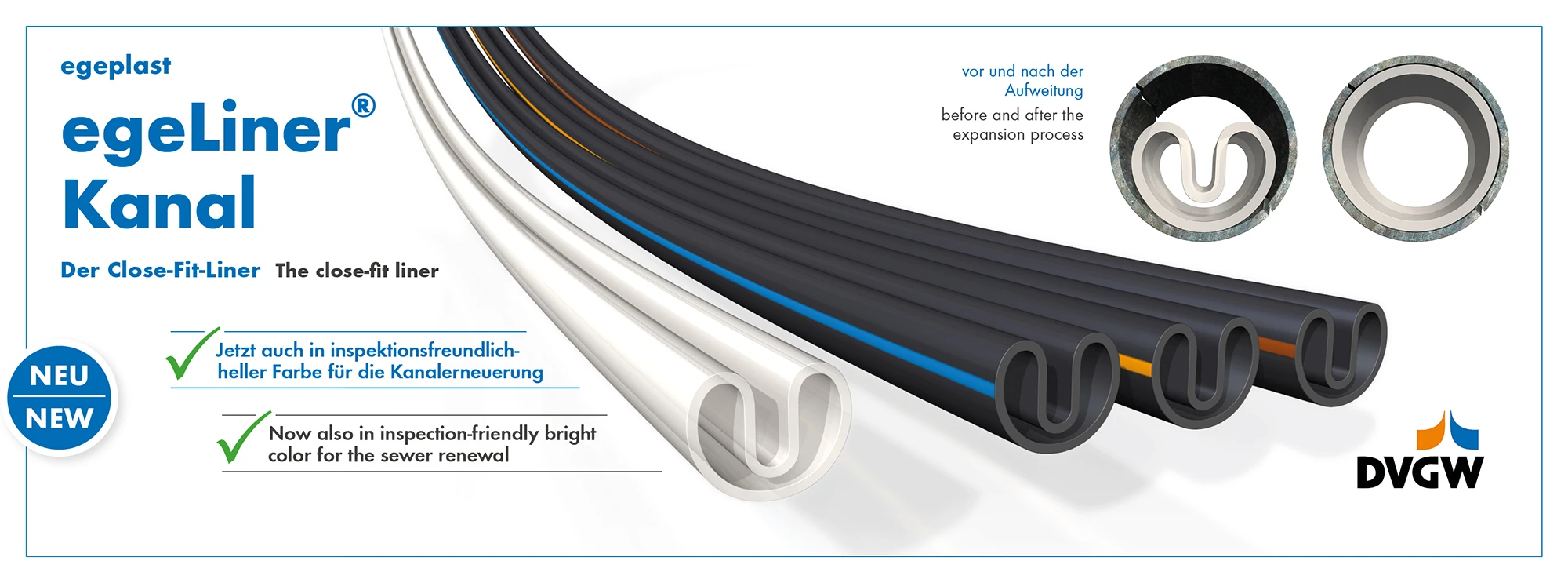
A cross-section reduction of up to 40% compared to a circular pipe allows long lengths to be wound onto steel drums and delivered to the construction site. The length of the pre-deformed egeLiner® can be matched to the section to be rehabilitated, and the reduced cross-section facilitates pulling it into the sewer. For example, 250 m of the DN 300 dimension can be manufactured, delivered, and installed in a single length.
In principle, the folded egeLiner® pipe seeks to compensate for the stresses frozen into the pipe wall and transform back into its original round shape – this is known as the reversion process, which causes the return to the original shape (“memory effect”). This property makes the close-fit method so efficient and ensures that the egeLiner® fits tightly against the inner wall of the old pipe after successful installation and can be fully integrated into the existing pipe network.

With 7,000 employees worldwide and a turnover of around 2.6 billion euros, the Max Bögl Group is one of the leading construction and technology companies in Germany. The company stands for innovation, quality, and sustainability – in traditional infrastructure construction, structural engineering, the energy transition, and the development of new mobility solutions such as the Transport System Bögl.
Source: Sustainability