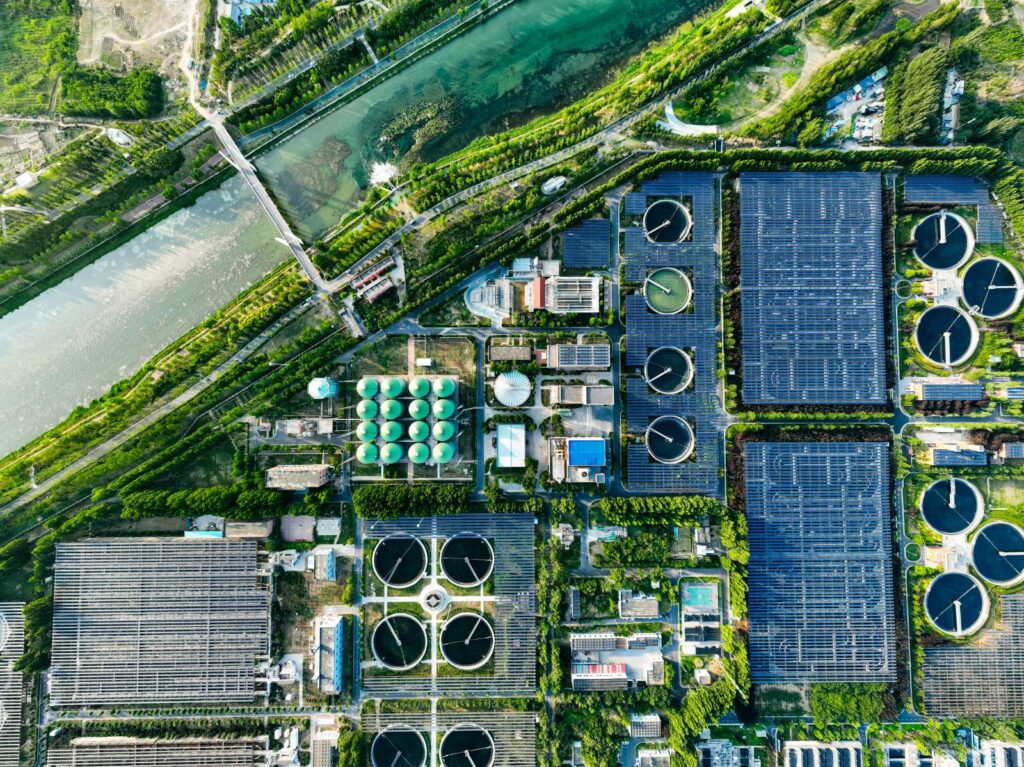
The quality of drinking water and the protection of natural resources are at the heart of sustainable water management. Against this backdrop, per- and polyfluoroalkyl substances (PFAS) are increasingly coming into focus for utilities, authorities, and network operators. To transparently assess materials in contact with drinking water, egeplast has additionally subjected its drinking water pipes to an independent PFAS test. The investigation conducted by TÜV SÜD confirmed that the tested egeplast drinking water pipes meet the defined requirements.
PFAS in the Spotlight of the Water Industry
PFAS are a large group of highly persistent industrial chemicals that have been used for decades in numerous applications due to their water-, grease-, and dirt-repellent properties—for example, in coatings, textiles, firefighting foams, or technical products. However, it is precisely this persistence that makes PFAS problematic: many of these substances barely degrade in the environment, can enter raw water resources via soil and water bodies, and pose analytical as well as regulatory challenges for water utilities.
For the water industry, dealing with PFAS is therefore primarily a matter of precautionary protection for water bodies and consumers. Industry associations have pointed out for years that inputs should be prevented at the source wherever possible. Removing PFAS from raw or drinking water afterward is technically demanding, energy-intensive, and involves additional costs. This makes it all the more important to identify potential input pathways early and to assess materials in contact with drinking water in a transparent, traceable way.
New Requirements for Drinking Water and Materials
Legal requirements are also becoming increasingly specific. The new EU Drinking Water Directive introduces PFAS-specific parameter values for the first time: 0.10 μg/l for the sum of 20 selected PFAS compounds, as well as 0.50 μg/l for the “PFAS total” parameter. [1]
In Germany, these requirements have been further specified by the Drinking Water Ordinance. The limit value for the sum of PFAS-20 applies from January 2026. In addition, a national limit value for the sum of four particularly relevant PFAS compounds will take effect from January 2028. This makes PFAS a fixed component of routine drinking water quality monitoring.
The discussion is no longer limited to raw water, industrial inputs, or legacy contamination. Increasingly, investigations are also examining whether components of drinking water installations or pipe systems themselves could contribute to PFAS contamination. Current studies from building water supply systems show no evidence of significant PFAS contamination from installation materials; nevertheless, the demand on manufacturers to transparently test the materials used and provide reliable information continues to grow.
Additional transparency for utilities, design engineers, and network operators when selecting durable materials
Independent PFAS Testing for egeplast Drinking Water Pipes
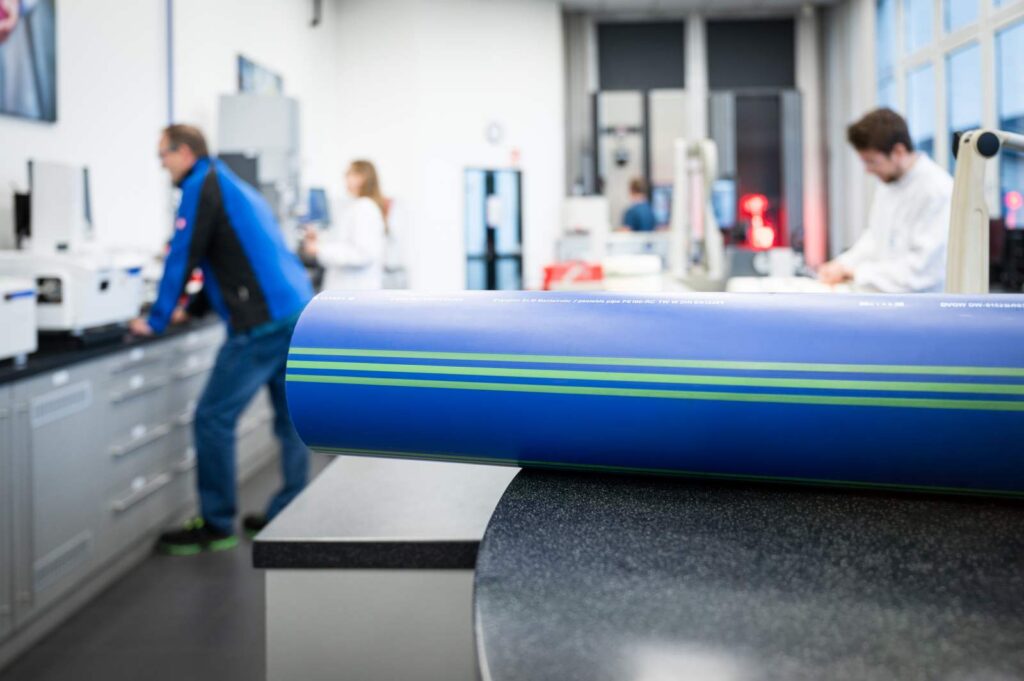
Against this backdrop, in addition to controlling the pipe materials used, egeplast has also had its drinking water pipes tested for relevant PFAS substance groups in an independent chemical investigation. The test, conducted by TÜV SÜD, was carried out in accordance with DIN EN 17681-1:2025-06. The presence of PFOS, PFOA, C9-C14 PFCA, PFHxA, PFHxS, and REACH SVHC PFAS was examined using modern analytical methods.
The investigation confirmed that the tested egeplast drinking water pipes meet the defined requirements. TÜV SÜD’s overall assessment was: “Test passed.”
Transparency for a Future-Proof Drinking Water Infrastructure
With independently tested pipe systems, extensive materials expertise, and a consistent focus on quality, egeplast contributes to a safe, sustainable, and future-proof drinking water infrastructure. This gives utilities, design engineers, and network operators additional transparency when selecting durable materials to protect a vital resource: drinking water.